
The Human Need to Control
The SwarmThe story contrasts military, industrial, and scientific efforts to control the sea with a world whose systems resist human prediction.
increasing Bearing strength in each event
 decreasing
Bearing strength in each eventdecreasingTechnology Enters the Deep
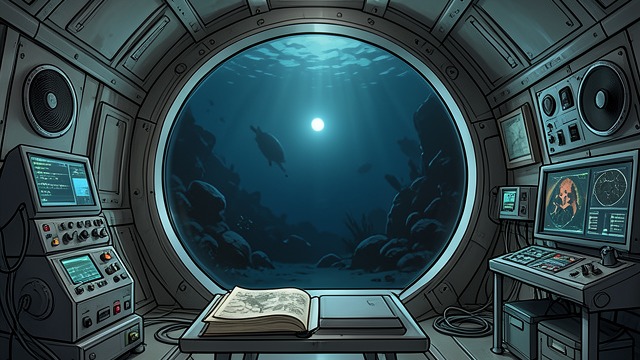
Instruments Promise Mastery
The mapped seabed
Robots, sonar, and simulation chambers give humans new ways to examine deep water.
The tools also encourage confidence that unknown ecosystems can be managed.
Models Miss the Living World
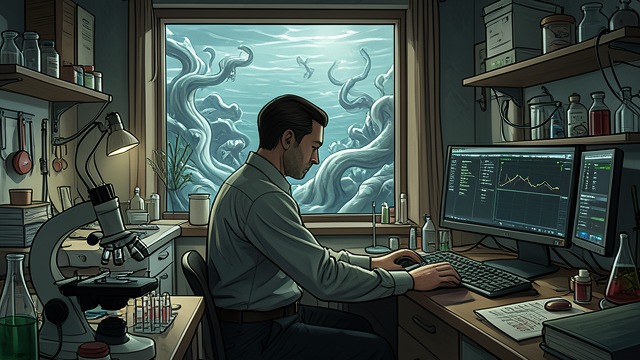
Data Is Not Understanding
The limits of simulation
Scientific models reveal hydrate risks but cannot predict every interaction among worms, microbes, gas, and terrain.
The catastrophe begins where human knowledge is incomplete.
The Military Builds a Fortress
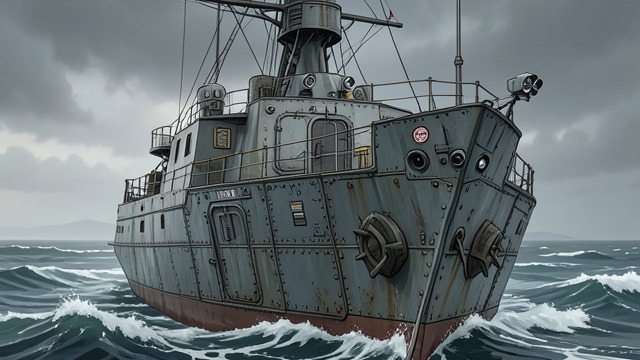
A Ship as a Controlled World
Security and containment
The carrier combines communications, labs, subs, and locked access systems in an effort to manage the crisis.
Its design cannot prevent the Yrr from entering through a single breach.
The Sluice Fails
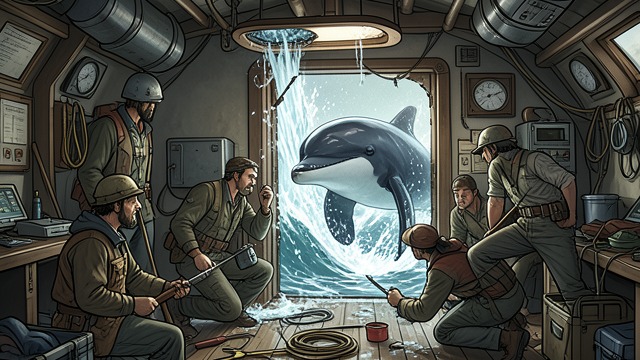
Control Systems Collapse
The sea enters the ship
An orca breaks through the hatch and the well deck becomes a chaotic battleground.
The ship’s safety systems become part of the danger rather than a solution.
The Ship Is Lost
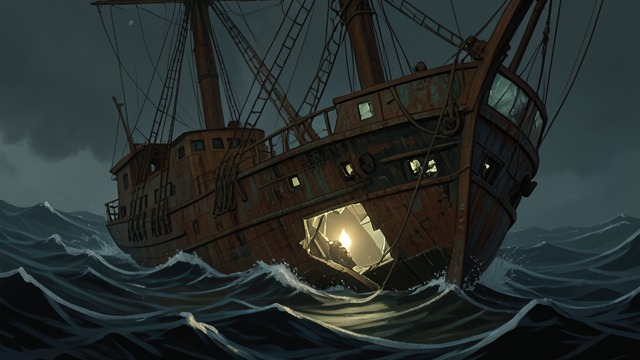
Mastery Is Not Control
The carrier sinks
The Independence breaks apart despite its technology, command structure, and military force.
Its destruction dramatizes the limits of human power over interconnected natural systems.
March, during the Statoil survey
April, as the slope destabilizes
August, aboard the Independence
during the well-deck attack
15 August, after the torpedo explosion
